APA Citation:
Cheng, E. (March 8, 2019). An unexpected tool for understanding inequality: Abstract math. Retrieved July 4, 2019, from https://www.ted.com/talks/eugenia_cheng_an_unexpected_tool_for_understanding_inequality_abstract_math?language=en#t-608519
Summary:
Category theory – pure math, mathematical thinking.
Take a look factors of 30.
Factors of 30: 1, 2, 3, 5, 6, 10, 15, 30
Another look at the factors of 30
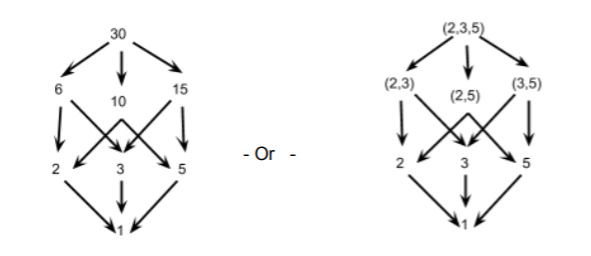
The hierarchy is seen – at the bottom two rows are the prime numbers, the third row has two factors and the top number has three.
Eugenia then takes the discussion into a real world aspect – looking at the privilege, starting with:
Privilege
| rich, white, male (30) | ||
| rich, white, non-male (6) | rich, non-white, male (10) | non-rich, white, male (15) |
| rich, non-white, non-male (2) | non-rich white non-male (3) | non-rich, non-white, male (5) |
| non-rich, non-white, non-male (1) |
She uses mathematical thinking to examine societies problems – and to understand our world, and our place in it relative to others.
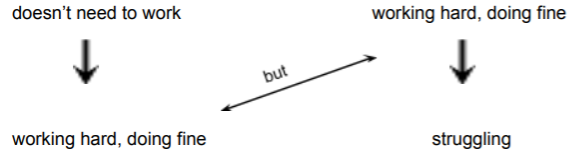
Eugenia shows how abstract mathematics is used to understand and empathise with others in this world.
My Question:
This answers my question about mathematical thinking as Eugenia uses logic and patterns to explore other ways of seeing simple mathematical procedures (finding factors) as well as extending this logical thinking to the world outside of the classroom.
 Content Resource Collection